Sunday, February 12, 2006

CONTACT!

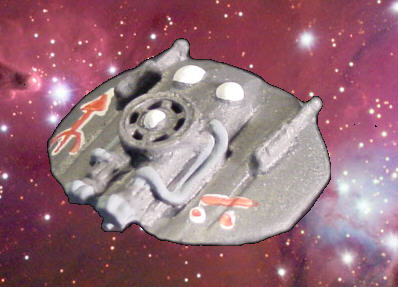
Yep, I've re-established a 'source' for much of my own, as well as many other's "gaming supplies", with a fellow of whom I'd met years ago over around the 'Olympia, WA state' area! His name is "John McEwan" and he's been keeping busy all of this time as well, with even moving from where HE used to be, to where he's at NOW! That also happens to 'be' right in the TOWN next door to myself here, while I hope to become a close 'provider' for HIM and many others, of "game bits" of a unique nature in mind. I expect the many devoted "fanzoids" for the 'A&A' line of games, to then 'be' ever "bigger" ones for THIS! Since they are the prime 'motivators' for their "gaming needs", then it just stands to 'reason' that they'll most likely want to HAVE these *Special* pieces done up properly and since no one ELSE is going to, then why NOT 'us'? I'll provide some "teasers" here so that YOU can 'see' for yourself just what I'm going on about:

While some of YOU might 'recognize' THESE, then let me reassure you upon them, that they are CLOSE approximations and NOT "exact duplicates", for the sake of 'protections' regarding any such. Of course, then YOU could "modify" these to your heart's content, ONCE you have your 'grubby mitts' upon them. There is much more for your considerations as well, and take your time when you can afford that, to delve into each & every kinds of these. He's even into some "minis" gaming with a select 'group', and of which I hope to become ONE of them! They're currently conducting some "Battling" within the "World War I in Africa" settings, and for which HE has provided ample 'means' for this with HIS 'set' of "figurines" that are available too.

Here is the LINK directly to the "website" of his:
"Tin-Soldier.com" REVIRESCO
and you can then check out upon MANY more there in the various sections. Those also include "Paper Models", as well as many metal-cast figurines, or even 'kits', while some of them can be 'purchased' pre-assembled and 'painted' already, should you wish to obtain such. He's even got some FREE "sample" types to have you get begun in some of these, while I'll leave that up to YOU to 'find' and obtain any.

Also check out "Joe Steadman's" website for the astute "grognards" amongst you, upon his up and becoming well known 'place' to BE with the "Wargame News" and its coverages of "What's Happ`nin mon!" in these regards. A big "shout out" and WELCOME to the esteemed, while venerable, ole "Rich BERG" himself, upon becoming "Geek-i-fied" now, and cut him some 'slack' will yas? We ALL have our 'opinions' and he's NOT making YOU "read over" his`n, is`n he now?

Here's "JOE's" LINK then: "Wargame News"
and let HIM 'know' that I sent yas!

Saturday, February 11, 2006

Blue Moon

Civil war has ripped across a fantastic world of beasts and magic. Two royal heirs, Prince Roland and Princess Elinor, each seek ascendancy to the throne of Blue Moon City, but the land is in chaos. In an outburst of violence during the ceremonial contest of succession, the two contenders lost control and slew Ordrac, the golden dragon of guidance and wisdom. With the death of the dragon, earthquakes shook the city on that Night of Doom, and the land's most holy relic, the crystal of psi, symbol of harmony and source of power, shattered into pieces.

Now the enmity between the rivals has deepened, and the two heirs enlist the aid of the eight peoples of the Blue Moon world to further their causes: the mighty Terrah, tenders of the land who control earthquake and storm; the Vulca, priests of fire and magical arts; the Aqua, guardians of water who command serpents and floods; the Flit, elusive rulers of the air striking from above; the childlike Khind, the city's crass brawlers who overwhelm with their numbers; the proud Mimix, fierce women warriors of the wilderness; the Hoax, protectors of knowledge who strike with science; and the mysterious Pillar, explorers, traders of potions, masters of the fearsome giant caterpillars. As the battle rages, successful leaders are awarded shards of the broken crystal by the three elemental dragons who guard them; when enough pieces are collected, the victor will be crowned and—it is hoped—peace and unity will be restored to the land.

Such is the setting of Reiner Knizia's two-player strategy card game Blue Moon, published in German by Kosmos Verlag and in English by Fantasy Flight games. In the game, each player is a general commanding one of the peoples of Blue Moon in battle; there are a series of fights in which players lay down cards of escalating strength, and the winners of these fights gain advantage in the tug-of-war for the three dragons' favor. When one player has run out of cards, crystals are awarded to the player who has swayed the dragons to his side, and the first player to amass five crystals is the winner.

The eight peoples of Blue Moon are each represented by their own deck of cards, and before the game begins the players will select the decks with which they will do battle. These decks are made up of four kinds of cards: Character, Booster, Support and Leadership. The most important card type is the Character, as these are the individuals who will be doing battle on the players' behalf; on a player's turn he must either lay down a character and continue the current battle or retreat. Each Character has a strength in the realms of fire and earth—for example four fire and six earth, or three fire and two earth, or even zero fire and zero earth—and these numbers are the basis for the way that battles are fought. At the beginning of a fight, a player will lay down a card, choose whether the fight will be in the realm of fire or earth, and then announce a total power within that realm, for example "four fire." His opponent must then lay down a Character card and announce a power that matches or exceeds the current total; if he is able to do so, the ball is tossed back to the first player, who then plays new cards on top of the old, announces a new power, and so forth, until one player cannot or does not wish to match the current total and so retreats from the fight.

In addition to the characters, players will also have Booster cards and/or Support cards in their decks; these are weapons, magic, monsters, forces of nature and other elements which aid the characters with additional power or by conferring other special advantages. The difference between the two types of card is how long their effects last: Boosters' effects only last for one turn, and are covered over by the next character played in the fight; Supports, however, last for the duration of the fight, and are only discarded when a player retreats. The rules governing how they are played are the same, however. On each turn after the first turn of a new fight (so as not to give the starting player too much of an advantage, presumably), players may play one Booster or Support card along with their character. Some Boosters and Supports will merely show values in fire and earth, and these numbers are simply added to the character's values (along with as any Support cards from previous turns). Instead of or in addition to values for earth and fire, Boosters and Supports can also have special power text which confers advantages on the player; they may alter the total power that may be announced, or the total power that needs to be met, or it may restrict what the opposing player may do on his next turn, or cancel the effects of other cards, et cetera. Character cards may also have special text as well, and so there is often a complex interaction among the various cards on the table.

The final card type is the Leadership card, of which each preconstructed deck has two or three. These cards confer powerful one-time advantages which are beyond the scope of power values; for example, they can allow a player to draw extra cards, or retrieve a card from the battlefield, or discard cards to attract a dragon, or remove cards from the opponent's display, et cetera. Players may play one Leadership card at the beginning of their turn, regardless of whether or not they plan to continue the current battle.

I have purposely not gone into too much detail regarding the specific rules and details of the game so as to keep the thematic strengths of Blue Moon in the forefront, but there is one particular rule which is important to highlight in order to fully convey the depth of the game play. When, during a fight, a player has laid down six Character, Booster and Support cards (not all of which need still be active), his potential gains double; if that player wins the fight, the dragons' favor is adjusted by two dragons rather than just by one. However, while one player is amassing cards, so is his opponent, and so one must always be aware of when the other player's potential reward will increase. What this means in terms of strategy is that players must constantly be judging their strength mid-fight; if weak, or if it would require the use of too many good cards to compete, one can bail out early to avoid a two-dragon loss; conversely, if a player is confident, he can try to string their opponent along so that they reach six cards and then try to deal a knockout blow. Players can even bluff by putting down a dangerous support card with nothing left in-hand to back it up in the hopes that the other player will be frightened away lest the contest drag on. What also factors into these decisions is the element in which players are fighting; the player who retreats will be starting the next fight, and so choosing whether the next contest will be in fire or earth. If one knows that he is generally strong or weak in one element or another, he can try to string the opponent along in his weak element, drop out before his opponent reaches six cards, and then make a more concerted push in the element in which he feels more confident.

Reiner Knizia's games often seem to have that "extra idea" which elevates the game from good to great. In Euphrat & Tigris, it is the balanced scoring; in High Society, it is least-money instant loss; in Amun-Re, it is the blind bidding for favors simultaneously determining economics. In Blue Moon, it is the interplay between the need to struggle in two different suits combined with the stakes-doubling of the prolonged fights. Without this concept the game would only be advanced War; with it, there is a constant need to assess one's situation, both short- and long-term. As one might imagine, there are a fair number of special powers which allow players to put down more than their typical allotment of one Character plus one Booster/Support on their turn, and these only add to the strategizing that needs to be done.

Such is the basic strategic framework for the game, and what fleshes out this system are the decks of cards themselves, for each has its own particular personality, strengths, and strategies. Each deck even has its own artist, style and color palette, and so one can usually tell which deck a card comes from just by glancing at the artwork.

The Vulca are tall, angular humanoids with multicolored fire erupting from their heads and who are rendered in deep yellows, oranges, reds, purples and blues. They are one of the more simple decks to play, as their advantage lies the strength of their characters; their numbers in fire are on the average greater than that of any other people deck. In addition, their supports tend to be negative rather than proactive in effect and frustrate their opponent's offense, for example by disallowing him to play Leadership Cards, disallowing him to play Support cards, or disallowing him to draw new cards into his hand.

The Hoax take the form of elderly scholars, painted in pale grays, blues and browns with precise detail; the characters always have books or writing as part of their accoutrements, and the supports and boosters tend to take the form of technology, from ballistae to strange science-fiction devices. They are also relatively straightforward to play, but their strength lies not in their characters' values but their cards' special power texts. Arguably some of the best cards in the game are to be found in the Hoax's deck (Tome of Wisdom, Duplicator of Strength, Brain Drain and Muster Reinforcements), and they have more Support cards than any other people. They are slightly harder to play than the Vulca because in order to compete they need to keep in their hand a good balance between Characters and Supports and Boosters.

The Mimix are fierce, feral, female warriors of the wilderness painted in a more-or-less naturalistic palette. The Mimix have fewer special-text tricks than either the Vulca or the Hoax, but their advantage is in their ability to play multiple characters on their turns, both to achieve high numbers and to more quickly reach the goal of six cards. Each Mimix is one of a pair of sisters who can be played together on one turn, and in addition there are "Free" Characters which do not count towards the typical limit of one Character per turn. In order to help the Mimix player find the mates to their cards, the deck also includes shamen who let the player draw extra cards from their draw or discard pile.

The Flit are strange, taciturn bird-men rendered in a simple, almost cartoonish style in watercolor-like tones. The Flit are one of the most unusual of the decks in that Characters make up less than half of the cards; however, most of the Characters have the "Retrieve" ability which allows them to be taken back into one's hand for reuse at the beginning of their turn. Each Character is relatively weak, but many have valuable speical power texts, and most of the rest of the deck is made up of Booster cards which can be paired together like the Mimix Characters, except that all there are not specific pairs but rather any two can be played together. These characteristics result in the Flit's being one of the most thematic decks, as the Characters will swoop in and out of battle dropping destruction from above. They are probably also one of the more difficult to play well, as one needs to make judicious use of the boosters and resist the urge to always retrieve their Characters (thus stagnating their hand).

The Terrah are men and women of a Native American or South Sea Islander look, painted in vivid reds and deep earth tones. They are the mirror image of the fiery Vulca, being strong in Earth values, and like the Vulca they have relatively straightforward Boosters and Supports that tend to hinder the opponent's free range. In addition there are also three Storm Boosters in the deck which can be used to draw the dragons' favor each turn until the opponent retreats. The Terrah are so strong and easy to play, in fact, that they are perhaps best used in handicap situations when there is a skill mismatch between the players.

The Khind are childlike creatures painted in a wry, surreal style with oversaturated reds and greens and purples and oranges popping out from chaotic backgrounds. The deck is primarily made up of Character cards, and all of these belong one of four gangs, the Cool, the Top, the Fun and the No. Individually the characters are weak, but like the Mimix and their pairs the members of a gang can all be played together and their power added, and, more importantly, one gang member can be played into a gang already on the table from the turn before and the cards are not pushed under the new play but are instead added to it. It can be difficult to mount a Khind offensive if the player is unable to draw into gangs, and so may have to tread water until he is able to collect a set, but once that player does have a healthy gang in his hand, he can be impossible to stop.

The Pillar are grim, wire-haired humans clothed in chitinous body armor and painted in browns and oranges. They are a relatively straightforward deck, like the Vulca or Hoax, but with more thematic supports; some of their Boosters are potions which increase their strength, while others are the dreaded giant caterpillars which force the opponent to discard Characters or retreat. Additionally there are giant butterflies which act as Supports or which force opponents to reveal the cards in their hand.

The Aqua are made up of amphibian women and the undersea creatures they control, painted in deep blues and greens. The Aqua is perhaps the most subtle of the decks and so the most difficult to describe, but you could sum it up by saying that there is a certain fluidity to the Aqua player's hand; there are cards that let the player discard cards, move cards to the bottom of his deck, and, most importantly, reshuffle his discard pile into his draw pile. Because of all this the Aqua have more ability to tailor their hand to the needs of the moment than the other decks.

However, it should be mentioned players need only buy as many Blue Moon decks as they wish; the base game comes with a straightforward but fascinating and replayable matchup, the Hoax versus the Vulca, and each deck can be purchased separately after that. With three decks there are three different matchups, with four there are six, with five there are ten, with six there are fifteen, with seven there are twenty-one, and between all eight peoples there are twenty-eight different matchups (or thirty-six if both players have a complete set of decks and you allow a people to fight against itself). Each matchup has been playtested, and, because of the interactions of the various cards, each has its own particular nuances. A combination that is devastating against the Flit may be harmless against the Khind, and vice versa.

If players want an additional challenge, they can incorporate deck-building into the game, although it might be more accurate to call it "deck-tweaking." Each player chooses a people* and then may swap or add in cards from other sets up to a total of thirty cards and ten 'moons', the moons being a rating of how powerful a card is (a relatively weak card may have no moons on it, whereas a very desirable card like Muster Reinforcements will be rated at four moons). If players want further leeway in the deck-building, they may buy one or both of the expansion sets, the "Emissaries and Inquisitors." These decks contain additional cards for each of the eight peoples, plus Inquisitors, which are meta-cards that allow players to have decks larger than thirty cards and ten moons and/or confer other special abilities, plus new types of cards which can be included in a deck to add new dimensions to the game and metagame (most likely in an inquisitor deck with its extra room, I would think).

This "scalable-to-interest" nature of the Blue Moon world I find very exciting; even just the base game on its own is perfectly enjoyable and highly replayable in its own right; in fact, it is just another entry in the Kosmos "Spiele für Zwei" series, and a comparatively good one at that. For just a little more variety a person could pick up a couple more decks and, as said earlier, have six different matchups to explore. Those who are captivated by the world can acquire all eight people sets and begin making their own decks, and for a more CCG-like experience they can put their creativity to the test and design something even more personalized using the Inquisitors and expansion cards. As of this writing the world of Blue Moon continues to grow, with invaders from other lands appearing for the first time, namely The Buka, and perhaps later the Phar.

The overall feel of the game is that of a struggle for which strength must be mustered, consistent pressure must be applied, and energy and advantage must be conserved for the moments when their judicious use will achieve results. The players are managing their decks of cards as they pass through them, and, unlike a war played out on a map where strength and weakness have locations on coordinates, the battlefield is that of time, where players must make the most of their forces and recognize the opportunities for triumph or disaster as they coalesce in the moment. As players get to know the decks better and better, they can plan for certain threats, count cards, look forward to certain combinations and play the odds.

As a game I feel that Blue Moon offers a great deal to those with an appetite for discovery and who like to sink their teeth into a system. There is depth, intensity and flavor; players can explore all the races, delighting in the different chemical reactions between the various reagents, or else concentrate on their favorites, studying their decks so that mid-stride they can see the continuum of force that they are marching through, passing through shuffled uncertainty closer and closer towards a known, inevitable, and hopefully prepared-for endgame. Skill and knowledge will be fearsome weapons, twin scythes cutting crosswise through the grain, but in every battle there are also moments of lightning surprise and blown kisses from fortune, turning the tide and sweeping startled armies out to sea. It is strategic...but alive.

It's rare that one has the opportunity to be present and aware as a great, sprawling creative effort is unfolding for their pleasure, being there to see each new chapter in the story as it is unveiled. Each new step on the journey brings us not merely farther, but deeper. For those who are gaming on the frontier, I highly recommend Blue Moon.

______________________________

* This may be more information than is necessary, but the preconstructed sets are not purely made up of only one people; each preconstructed set contains three cards from other sets swapped in plus one mutant which does not belong to any specific people.

Friday, February 10, 2006

It's a cooperative game, not winner take all.

Susan over at Game Ranch posted some insightful comments about the BGG/game bloggers conflict, whether it be real or imagined. Naturelich (who I have always envisioned as a hippie for some reason) followed up. Fairly quickly several other bloggers chimed in. The topic sprouted and took on a life of its own.

Boardgamegeek vs. the Blogs

First of all Boardgamegeek is the site for the boardgame community world wide. There is no other place to go to research such a variety of games. There is no blog, nor any other medium on the horizon that will replace BGG anytime soon.

Second of all I don't accept the notion that a lot of quality content is being moved from the Geek to the blogs. Some has moved to be sure. Much more is still being added to the BGG database. Most importantly, I believe that much of the material on the blogs would have never been created if the blogosphere didn't exist.

But as much as I appreciate Boardgamegeek...

...the point I want to make is that BGG is no longer a community. It is a bustling city. Don't get me wrong, growth is good. I like to see a healthy boardgame industry. I like to see good game database where enthusiasts can meet and interact even across borders.

But as is always the case with growth I no longer know my neighbors. I no longer feel like I'm chatting over the fence with Wilson. Wilson moved out and a fraternity bought his house. A well behaved fraternity to be sure, but there are people in and out at all hours of the day and I can no longer keep track of who's who.

There used to be a yappy Potter dog that occasionally disturbed the neighborhood. Now the noise of passing traffic is constantly drowning out the sounds of the kids playing across the street. The cranky guy who would sit at the diner and randomly correct people's English doesn't seem to get out much anymore.

Aldie Griffith and Derk Fife used to keep things under control, now there is a full time police force. All the police are fine people, but the fact they are needed is sad. About the only thing the police used to deal with was the town drunk. Now when Otis "Shillking" Widderich gets drunk, obnoxious and riles up some old ladies he doesn't even stand out from the crowd.

The transient population is booming. Every year the traffic gets worse. Billboards are springing up along the streets, which is good I guess. The revenue from advertising offsets the need for taxes. But...

This is a real ad. I clipped it Thursday:

Carcassonne Travel Guide
Traveling to Carcassonne?
Start with Yahoo!
Travel Guides and save
up to 70% on hotels.
Find...
travel.yahoo.com

Advertising is needed to keep the site free, but is this advertisement adding to the community?

The city fathers are dealing with the expansion very well and deserve lauds. Nevertheless many of us have decided to move to the burbs.

Right now in the blog-burbs property is cheap. There are no zoning regulations. The traffic is slower. The neighbors keep to themselves, but will always wave if you are passing by. If someone leaves some trash on my street I can throw it away. When I throw it away I can be reasonably sure no one will complain that they have a right to leave trash and by removing it I am censoring them.

I still commute to the city everyday. I go where I need to go and if I happen to meet an old acquaintance all the better. Although I still think of the city as my city, more and more of my time is spent tinkering around in my own garage. I walk the dog around my own neighborhood once each day to keep just to track of the neighbors.

I think everyone in the burbs has an interest in maintaining a vibrant city. The little secret of blog-burb is that most bloggers only last for a few months and then crap out. Most boardgame blogs only get updated once every month or two. There are only a handful that are updated every day and less than a dozen others that are regularly updated 2-3 times each week. The boardgame blogoshere isn't as healthy as it might seem to an outsider. The ranks of the bloggers are mainly replenished by people who cut their teeth on the Geek.

It doesn't have to be a case of Us vs. Them and I don't think it is. If the Geek ever goes into decline it will affect the blog-burbs and the whole boardgame world negatively. I think every blogger is aware of that fact on some level.

Coldfoot

Thursday, February 09, 2006

Games to Watch For: Nurnberg '06

The Eurogaming year is centered on two points. Toward the end of the year we get the huge consumer show at Essen, and then in February we get the Nurnburg Toy Fair. Nurnberg is a different sort of show than Essen. It's not open to the public, and there are more prototypes shown off, which might not become actual games for many months. Nonetheless, there's cool stuff to be seen.

Last year in October I wrote about the newest releases at Essen, and now I'm going to follow that up with Nurnberg '06: a look at a new set of games that may be making their way to us between now and ... next Essen. As before, I've picked my top ten, mostly focusing on gamer's games, with my top contenders marked with a star(*).

I should note that, as I commented on in my year-end round-up, much of the gaming fare continues to get lighter. Many of the games I selected are on the light-to-medium side of things, and many designers who have done heavier work in the past are emphasizing lighter games now. Over at BoardGameNews, a translated Nurnberg report seems to make the same point.

Augsburg 1520*

URL: http://www.boardgamegeek.com/game/21892
Authors: Karsten Hartwig
Synopsis: auctions, economics, resource management
Background: Germany, 1520
Like: Chinatown, Louis XIV
U.S. Publisher: Rio Grande(?)

Alea has two games demo-ing at Nuremberg, this one and For Rum, Renown, and Honor. The latter looks to be pretty light, and has put a few people off Alea from its previews, but Augsburg 1520 seems to be in the old Alea mold, just like Louis XIV was last year. It's about Jakob Fugger, and is a game of economics, auctions, and favor trading. I'm guessing it's going to be another somewhat dry game, also like Louis XIV. Karsten Hartwig, the designer, just has two games to his credit: Chinatown and Lucky Loop.

There's been no actual word on U.S. publication, but I think it's a fair bet that Rio Grande will step up.

Bison*

URL: http://www.boardgamegeek.com/game/21287
Authors: Wolfgang Kramer & Michael Kiesling
Synopsis: exploration, majority control
Background: Native America
Like: El Grande, Goldland, Lost Valley
U.S. Publisher: Phalanx Games

There's two Kramer & Kiesling games out this Nurnberg. Unfortunately K&K's other new release of this season, Celtica, has already gotten pretty trounced for the crime of being a family game. Not so Bison, which looks to be a new gamer's game. It follows in the footstep of Phalanx's Maharaja, which didn't exactly set the world afire, but was a solid tactical game. This one looks a like like Kronberger's Lost Valley, and no doubt will combine tactical play, resource management, and (I think) exploration. There's apparently majority control with a unique twist, as different place players score for different things.

Blue Moon City

URL: http://www.boardgamegeek.com/game/21882
Authors: Reiner Knizia
Synopsis: card management, city development, majority control
Background: Blue Moon City, after the war
Like: Maharaja, Tower of Babel
U.S. Publisher: Fantasy Flight Games(?)

Most Reiner Knizia big-box games are cause for attention, and this one seems to be no exception. It's a unique building game, where you're using hands of cards to rebuild Blue Moon City. You can use stronger cards to build faster or weaker cards to give you special advantages with their powers. Blue Moon City has two pretty uncommon features for Knizia. First, the game seems to have a pretty strong geographical basis, something you find in Knizia's tile-laying games, and just about nowhere else. Second, there's some majority control, with people who help a lot in a building rewarded more than people who help less. We saw majority control in last year's Tower of Babel, but it's again a pretty rare Knizia element. (If Knizia does a third majority-control-based game this year or next, we can call it his "Majority Control Trilogy".) Don't get your hopes up too high for another Tigris & Euphrates or Through the Desert; I'd guess this is going to be medium-light, but if you liked last year's Tower of Babel and Palazzo, I'd bet this one will please too. As with Augsburg, there's not yet a confirmed American producer for this title, but Fantasy Flight Games is a pretty good bet.

California

URL: http://www.boardgamegeek.com/game/21464
Authors: Michael Schacht
Synopsis: house development, resource management, tile laying
Background: California, modern-day
Like: New England
U.S. Publisher: currently none

This was one of my last additions to the list because the theming looks sooo bad. It's Beverly Hill Billies California, full of movie stars and billionaires, and you're trying to decorate your house. Yet there's an interesting looking "house construction" game with tile-laying that's very reminescent of New England (or Eden) for that fact that you're trying to match certain patterns. And some of Schacht's other Abacusspiele games in this same size (Hansa and China) have been great. So, it's a wait and see. Of course it might be a long wait because there's no American publisher on board that I know of, and Uberplay who did Schacht's last few from Abacusspiele, isn't doing co-ops with Germany anymore due to the precipitous plunge of the American dollar.

Cleopatra & The Society of Architects

URL: http://www.boardgamegeek.com/game/22141
Authors: Bruno Cathala & Ludovic Maublanc
Synopsis: card management, palace development, brinkmanship
Background: Egypt, 1st century BC
Like: Big City, High Society
U.S. Publisher: Days of Wonder

Days of Wonder produces light yet beautifully produced games. This one looks like it's going to blow the doors off their normally high production values, with its promise of high-quality 3D pieces that you use to build Cleopatra's palace. Personally, I'm a sucker for Egyptian themes, and even if it's light I'll be happy to see this new game beside Ra and Amun-Re. It looks like there's some card management here but that the real catch of the game is that if you use too many "good" cards, you end up out of the game, which is shades of High Society, where the biggest spender loses. The mechanic isn't innovative, but always introduces an interesting dilemma into the gameplay.

Emira

URL: http://www.boardgamegeek.com/game/18931
Authors: Paul van Hove & Liesbeth Vanzeir
Synopsis: auction, economics, palace development
Background: Arabia
Like: Princes of Florence
U.S. Publisher: Mayfair Games

This was literally the last item I added to the list, and that was because of the theming. Originally called Harem. Though it's now called the much more empowering Emira, it's still about collecting women. Now, I'm by no means a prude, but I know a game who's theming is going to make it hard to get it to the table when I see one, and I'm afraid this one could sit next to Relationship Tightrope, gathering dust. In any case, Emira won the 2004 Hippodice Game Design competition, and with its publication it'll join luminaries from that competition such as Chinatown, Mississippi Queen, and Vino. The gameplay doesn't sound terribly innovative, but it looks like you have interesting economic decisions and auctions as you try and improve your palace and yourself in order to attract women. From here the similarities to Princes of Florence look strong.

Gloria Mundi

URL: http://www.boardgamegeek.com/game/13286
Authors: James Ernest & Mike Selinker
Synopsis: card management, resource management
Background: Rome, c. 500
Like: The Settlers of Catan, Der Untergang von Pompeji
U.S. Publisher: Rio Grande Games

Just last month I was talking about how Rio Grande's inability to do their own productions might be putting them into a death spiral. And here they are producing their first original big-box game ever. James Ernest isn't really known for doing complex games, but his collaborations with Selinker seem to be his higher concept releases. This one has some resource management, but the need to constantly protect those resources from invading hordes. The race to flee the fall of Rome reminds me of the similar flight from Pompeii in last year's Klaus Jurgen-Wrede disaster game. Of course it coule be a while before we see this game, because it was on the Essen '05 lists too, and RGG's last self-production works, the Bohnanza supplements, certainly took a long time to come to fruition.

Leonardo da Vinci

URL: http://www.boardgamegeek.com/game/21920
Authors: A group of designers
Synopsis: auction, resource management
Background:
Like: Princes of Florence?
U.S. Publisher: Mayfair Games

I have some reluctance to include a daVinci game (the publisher, not the inventor) here, because frankly they don't have any track record for gamer's games. Don't get me wrong, they did a great beer-and-pretzels game (Bang!) and a number of good family or party games (Dancing Dice, Farfalia, Lupus in Tabula, Tuchulcha). Contrariwise, however, their attempts at gamer's games have had various flaws in them, including the weird complexity of Oriente, the endgame failure of Fredericus, and the chaotic craziness of Palatinus. Given that pedigree, I'd be pretty tempted to take a wait-and-see attitude toward Leonardo. However, Leonardo has gotten a lot of press as a real gamer's game, and as a result I feel like I have to include it. In addition it's been picked up by German publisher Abacusspiele, which I believe is a first for daVinci. So, I've got some concerns, but hope.

The mechanic is apparently using auctions to buy resources to build inventions, and I think the success of the game will mainly depend on how well those auctions work. I've definitely played many American auction games which just plain didn't work, and many German ones which largely did; I'm hoping this falls into the latter category, because the theming could produce a very evocative game. (I pretty arbitrarily listed Princes of Florence as a similar game because it's a rare game where you auction items, then do something useful with them rather than just collecting. I've actually seen just about no info on how the game works, so it could really be like anything.)

Thurn & Taxis*

URL: http://www.boardgamegeek.com/game/21790
Authors: Andreas Seyfarth & Karen Seyfarth
Synopsis: connectivity, logistics
Background: Germany, 18th century
Like: China, Medieval Merchant, Puerto Rico
U.S. Publisher: Rio Grande Games

Thus far Andreas Seyfarth remains a one-hit wonder; well, perhaps one-and-a-half, since he added San Juan to the Puerto Rico family a couple of years ago. Nonetheless a new Seyfarth game bears at least some attention, especially when it's being produced by Hans im Gluck, who has a good reputation for serious games. This one is going to be lighter than Puerto Rico. It looks like a pretty simple connectivity game where you're constantly getting points for laying longer routes based on cards in your hand (but about mail coaches, not railroads). It's got some action roles too, ala Puerto Rico (or moreso: Age of Steam, since they're an extra effect on a turn, not the main thing).

Ticket to Ride: Marklin Edition*

URL: http://www.boardgamegeek.com/game/21348
Authors: Alan R. Moon
Synopsis: connectivity, delivery, set-collection
Background: Germany, recent centuries
Like: Ticket to Ride
U.S. Publisher: Days of Wonder

I'm not sure the third iteration of Ticket to Ride still qualifies as new and exciting, and it's certainly not as much of a gamer's game as some of the other things I've mentioned here. Nonetheless, I suspect it'll get more plays in my house than anything else on this list. This new game is set on a German map. However, Moon has taken a step beyond, and continues to make sure that each new edition of Ticket to Ride has new mechanics and thus some notably different gameplay, which I think does a lot to keep the franchise fresh. This time around we have passengers and merchandise and a 10-point endgame reward for the most tickets rather than the longest route, all around resulting in something new and different.

Other Releases of Note

Nurnberg truly seems to be the season of the expansion, especially if you're the SdJ winner, so we have the fourth Alhambra supplement, the fifth (eighth?) for Carcassonne, and the first for Niagra, as well as the first for the non-SdJ-winning War of the Ring. And I've already covered the newest Ticket to Ride, being offered as a new game rather than a supplement. Queen is taking a similar route, rereleasing Wallenstein as Shogun (though I'm not convinced we'll see it before Essen, because I don't see it mentioned in any previews, else I'd have included it here).

Beyond that there are many more releases, and no doubt I've missed something notable. I've already mentioned two near misses from this list: Celtica and For Rum, Renown, and Honor, each of which appear to be very light big-box games. They were my first eliminations from my original list of 15, shortly followed by Reiner Knizia's Double or Nothing and Tom Lehmann's Um Krone & Kragen. I'm not sure the first is actually being released at Nurnberg, and they both look like lighter dice games. My #11 which barely missed the list was Mykerinos by Ystari Games. It looks lighter than Ystari's previous releases, and it's by a brand-new author, so I eventually let if fall off the bottom.

If anything was missing from my list, hopefully it's one of those five and not something I overlooked entirely.

Essen Mini-Followup

Finally, I want to do a short followup on the games I highlighted in my Essen watchlist, last October. I'm going to write a full column on it at some point in the future, but since they still qualify as new games, they're worth a short note here.

Of the 10 games I mentioned there, 9 have been released, with Tempus being the stubborn hold-out. In addition I feel like I missed just one game of note: Antike, which despite its issues is an intriguing Mediterannean logistics game. Of those 11 games (including Antike) I've played six. Here's my thoughts of them, in the form of blog entries or reviews. I'll write a more extensive entry on them all when I've gotten to play most of the rest.

My Reviews: Antike (C+), Caylus (A, with caveat on length), Elasund: The First City (B+), Hacienda (B), Mesopotamia (B-), Railroad Tycoon (B+)

Wednesday, February 08, 2006

A Lesson From Bess


The house was quiet, all the lights turned off except the one I was reading by, four cats quietly snoozing in various areas of the house when all of a sudden schwoongngngng. (O.k., onomatopoeia is not my strong suit.) Bess had decided she wanted to play with the donut. This is a simple but brilliant cat toy consisting of a plastic ball trapped inside a plastic ring in such a way that the cat can smack the ball around the ring but can’t remove it.

When my heart had returned to its normal pace, I was struck by a thought (as I am wont to do in the rare moments of quietude): cats do not require someone to play with them. She was quite happy and entertained to sit there swatting that ball around and watching it until it taunted her enough to swat it again.

Could I get to that place with my board games? Did I even want to try? Maybe the lesson is that we should take quiet moments to enjoy the simple things around us.
~~~~~~~~
What Are The Odds?

We were six on our last game day, one relatively new to strategy games (Melissa) and one new to the group whose experience and expertise was yet to be determined (Jeremy), so I pulled out Shadows Over Camelot. Mike and I decided to throw in the Traitor since we hadn’t played with it in the previous game we’d played.

The new players seemed to get the hang of it with the exception that Jeremy kept choosing to draw a black card or place a siege engine when he could have taken a relatively painless life hit since he was playing Sir Palamedes and would receive an additional life point when he helped complete a quest. We reminded him a couple of times but didn’t really think too much of it when he chose to ignore our helpful suggestion. I know, we should have been more suspicious but we had no previous games with which to judge his mind-set. Maybe he loathed the idea of being down to 1 or 2 life points and living on the edge, as it were. Anyway, I’m sure you’ve guessed that he was, in fact, the Traitor. We would be more aware of the brute now.

We all had such a fun time that we decided to play again. The cards were all well-shuffled and we were off to be heroic deed-doers again. This time we were a little more wary of our fellow knights. Melissa made a suspicious choice of using an extra action, which cost her a life point, to turn in 3 identical cards and receive a life point. Hmmmm. We tried to explain the waste of a move to her but she insisted. Ah-ha! Traitor, cried Mike. But we were wrong. On we pushed with the thought that maybe we were free of a traitor this time.

We were very close to winning the last quest we would need to win the game but also very close to losing one that would put the last siege engine around our castle. We thought we had a plausible, cooperative plan that would see us through to win the day but then Jeremy took a siege engine from supply and plunked it down on the board. Hey! If you do that, we lose—game over; you know that, right? A smile crossed his face. Yeah, he knew.

So what are the odds that the same person would be the Traitor in two successive games? I don’t know but we laughed about it the rest of the night. I guess we now have an idea of Jeremy’s expertise in the game arena. We also know that Mike can’t shuffle 8 cards worth a darn!
~~~~~~~~
Until next time, may all of your expeditions be profitable.

Mary

Tuesday, February 07, 2006

Inside and Outside the Game Experience

This article is sort of a followup to this. You can also refer to Adam Conus's The Trading Game Experience: Part 1 for another description of the game experience.

RPGs

I have once again started creating an RPG world; my game group consists of a number of people from diverse backgrounds. Some of them have RPG experience and, like me, quit playing after 3e DnD (another discussion). Some of them never played an RPG and are interested in knowing what it's all about. It's just another type of game, right?

Well, no.

We won't be playing our first game for another two weeks, at least. Yet for the next several weeks, we will be "playing the game". We're reading rules, designing characters and the campaign. Discussing. Planning. And so on.

DnD, and RPGs in general, provides not only a game but an entire game experience. Maybe it's the complexity of the rules, which requires study by the game players to get the full experience. You might be tempted to say that it's a deficiency that so much has to be built before you can start playing; I don't think so. You may as well say that C++ is deficient because so much has to be programmed before you get an application.

This game system, game preparation, game immersion, what have you, creates passionate gamers. The "game" is not something you take out of the box, play, and put away. It is a little world that creeps into your own world, the way that sports teams become important to you.

It's the same way that a hobby becomes important to you. You can garden. Or you can immerse yourself in gardening, learn about soil and acidity, meet other gardeners, and learn about mail-order delivery. The hobby becomes part of you, even when you are not directly involved in it.

CCGs

Despite DW's ranting, Magic and CCGs hold the same allure. It is not the preconstructed decks that make the hobby. It is the deckbuilding and research that adds so much to the game. Now my own Magic experience is limited to the few thousand cards I and my friends own. When we want to play Magic, we grab some cards, draft, build decks, and play. That is nowhere near the immersion you get from following pro-tours, but even that experience is more than a typical board game. Drafting. Deck-building.

Chess

RPGs and CCGs are game experiences because they are so complex and allow so much personal preparation. But note that another game with a complete game experience is Chess. Little old boring always-starts-the-same-way Chess (not talking here about Chess960).

Someone once commented (can't find it!) that coming into a game of chess was very similar to coming into a game of Magic: each player brings a "deck of strategies". You play this opening, I counter with that. You cast this instant, I cast this creature. You play an enchantment. I throw a fireball.

I guess if you sit down to game of chess without this sort of preparation, you could still enjoy the game, but you miss out on a grand experience. There is something nice about that experience. There is also something nice about playing without that experience.

(Let's not get into the old "jedi vs ewoks" debate again, however. Let us just assume that both types are valid. In fact, let us assume that both types are entirely different games. Casual chess vs Serious chess. Casual PR vs serious PR. Entirely different games.)

Other board games

The same experience can be found in some board and card games, such as Scrabble (memorize those word lists!), Bridge (iron out that bidding convention!), and so on.

Did you ever hear anyone talk about Puerto Rico that way? It takes five to ten minutes to set up a Puerto Rico game, but I've never heard anyone call that quality game time. "Oh, I've been thinking about the different ways we could set up the colonists. I tried it a few hundred times in a practice run, but I wasn't so happy, so I swapped out a few brown ones and put in a few green ones. Want to run it through a few times tonight?"

Even when I play, and I play by drawing or arranging buildings from a pool of 120 different buildings, I never experience the pre or post PR game as quality game time. Maybe, maybe, we might discuss a certain move in round 12 that threw the game, but that's as far as it goes. Puerto Rico is not a game experience. (I still love it.)

I imagine that Alex and Jim got a bit of that experience while they were working on their PR strategy guides, but thereafter it must have waned.

What does it take to get that rich experience in a board game?

- An incredibly diverse type of playing experience each time it is played. For RPGs you have an infinite worldspace. For CCGs, you have thousands of card combinations. For chess, your worldspace and pieces are limited, but the game is sufficiently balanced and sufficiently analyzable that you can find thousands of valid stylistic play patterns.

- Personal preparation is inherent to the game. Preparing a common set of buildings in Puerto Rico is not personal preparation. If there were several hundred buildings, and each player brought to the game those buildings he or she would be allowed to build during the game, you might have a game experience.

- It doesn't hurt to have open source components, so that people can spend their time building and collecting beautiful components (such as chessboards).

- A system that encourages contributions from people to enhance the game also helps. For RPGs, this means that anyone can create new adventures, character classes, spells, and so on. Wizards of the Coast is the only one who can create cards to their game, but the deck creation and combinations are open source.

Instead

Since most board games don't seem to have this "game experience", people in the board game world have created their own experience by collecting multiple games. Storing games, buying games, trading games, comparing games. Game play order at a game club is like playing with a deck of cards: "I'll play Puerto Rico, and then Age of Steam, then I'll hit you with San Juan." "Oh yeah? Well, I counter your San Juan with my Alhambra, and cast Torres on your butt! Eat hot action points, flyboy!"

Our game experience is blogging, reading, and so on about a whole bunch of games, instead of about just one game.

I think this is a cop-out. I think it points to something lacking in the games themselves. If each one of these games can't hold our attention long enough to create an obsession, is it really that good? Yeah, if I weighed fifty of these games versus a CCG, I would pick the games. But if you had to weigh only ONE game vs a CCG, which would you choose?

Yehuda

Sunday, February 05, 2006

the BIG 'game' A

Yep its ON right now as I 'type' this UP! so here's my "obligatory" 'shout-out' about "GO WIN SEAHAWKS!" We'd been awaiting upon THIS for lo these many decades and FINALLY it is "happenin!" I know many others are just as happy upon that little 'factoid' as well, so ROOT for WHOOT you GOOT, and that's 'who' WE gotz! They JUST 'played' some little 'ditty' by "Harrison Ford" and what's UP with 'that'? DAMMZ, anyone ELSE 'do' better? "are you READY for some FOOTBALL?!?" yes, so STFU and 'play' the damm 'game' will yas? sorry about my "FRANCE-land-'speak'!" there, but "hype" goes ONLY so far, while them damm "advert-spazz`rs" just don't 'get it', or so it seems. Most of the times then I just 'click' onto another "pre-set" channel during those, and I would rather 'catch' something else instead. I'll "recap" this as it goes from 'Quarter-1' and on. The Seahawks get the "coin flip" and 'elect to recieve' in this, with them having to "Punt" after a 'set of plays' without 'scoring', and the "Steelers" end up with the BALL on their '20-yard-line', from that going into the "end zone". Penalties aren't helping matters for THEM. '2'-"false starts" with '3' & OUT! with "Punt" to the "Seattle" '38'-yard-line. '2' more SETS of '3'-&-OUT for EACH of them now. oh yeah, from the looks of this, then those 'folks' who GOT the '0'-'0' "line" in their "pools" ought to be "happier" about THIS. oops! too late as Seattle 'scores' a "Field Goal" in the waning 'seconds' of that.
2nd 'Quarter'-"yadda yadda yadda", for "Pittsburgh" with defensive 'pick' by "Seattle" and "got nuthin" from that, while the "D-fens" steps up but the Steelers make a BIG 'play' now so that they BOTH got a 'score' = "T D" so 7 to 3 now. It should NOT have been 'given' for theirs "T D", unless you CHEAT like a 'scurvy cheater', but what can you 'do'? while I'm sure that THEY would've on their next attempt, and the NEXT time then I hope that WE 'get' a "controversial CALL" our 'way' ya bastiches! oops! I 'guess' NOT eh? "double-scurvy-cheaters-squared-&-quartered" it would seem huh? boy some folks JUST can't "play fair & square". . .'mumble-grumble-bumble-moanble' "missed 'it' by a 'foot'!" So just before the END of the "half" with "Seattle" on the 'march', then they 'settle' FOR a "Field Goal" and for "naught"! geez-loueeze
3rd 'Quarter'- kicking OFF to the Steelers then they bring it OUT to the HALF the mid-field and start from there. 1st play OFF and they 'score'! not too shabby & "meh!" damm 'lucky' bastiches
so Seattle DEFENSE din`t, but oh yeah they 'did'! NOW the 'O' EARNS scorn with their 2nd MISS of a "Field Goal", and little wonder that the Steelers bested them. But DAMM "luck" is in their 'favor' it would seem, as not much of "playing" is taking place. so instead of this being 14 to 10('16') then it is worse,
4th-'Quarter'-with the "D"-din`t agin with 21 to 10 now when it ought to have been 17 to 14, and what's to say? it SUX! do ANYTHING! why don't this END as a 'pity' `pon us, as it is a letdown for the SEAHAWKS! fans today. There was so much 'promise' in them and let's HOPE like "hell" it don't TAKE another '30'-years to get BACK! dammit! with their "missing" points it didn't HELP then, and it would be MUCH "different" but NO such "luck" there EH!
oh yeah and the "spread" WAS 'covered' in this heh heh Good for YOUS!

As for the other portion of THIS, then I wish to have it become well known, as well as 'established' that MY "Combat Resolution System" will be 'going' as a "commercial" entity. I've already got it 'posted' upon the BGG 'site', while further "refinements" shall 'evolve', as I put them into practices. This has the "dice roll"-LESS-tm, and "Simul-FIRE"-tm methods for the time being, and YES I'm 'serious'! I fully intend and can conceive OF & for yet others once I 'apply' their "specifics" FOR each 'one' of them. ANYONE who would like to partake of the "experience" can MAKE their very OWN "personal use" copies of whatever I conceive, and I would welcome ANY to 'make up' their very 'own' GAME as well. It is WHY I desire to keep the BASICS open and available to whomever. You'd "catch on" FAST then. Then with just the basic "expansions" FOR them you can proceed from ONE to the 'next' or even 'combine' YOURS and 'others' when you gather for whatever. The BEST 'part' of it ALL is that you just whatever 'bits' YOU happen to have while we'd provide distinctive & appropriate 'types' as well in a "Battle Set" but YOU have to seek somone to 'detail' these yourself, OR that WILL "cost extra", and try this sometime to 'see' what I 'mean'.

Saturday, February 04, 2006

Gaming at Work

It sounds like an ideal job concept for a gamer doesn't it? Unfortunately this piece is not about being paid to play games, but about playing games at your, well actually at my, place of employment.

I work for a large organisation in two interconnected eight-storey buildings down by the riverfront at the Docklands in Melbourne, Australia.

The buildings are open plan with a large number of meeting rooms, including some outside the security zone near the reception area and some public places in the interconnects between the two buildings.

The second building was opened in October 2004 and Gamers@Dockers was founded by Greg Collins, David Coutts and myself shortly thereafter.

We sent out initial announcements to four main groups:
1) Gamers that we knew inside the organisation (a small group)
2) IT staff within the organisation (more gamers per square inch than the general population)
3) Other gamers in Melbourne that we knew
4) boardgamegeek where I requested that an Australia > Victoria sub forum be set up

When we started Gamers@Dockers we realised that there were at least four or five gamers working in the same building so we started to hold occasional lunchtime game sessions.

We utilised one of the public areas that had a decent sized table. Our lunchtime is an hour in length, so this does immediately rule out quite a few games, but still leaves a surprising number eligble for play. Card games have been the most common with Gang of Four, Mag Blast (classic and 2nd edition), David and Goliath, Lost Cities, Bang!, High Society and Guillotine all being played. We have also played Ra, Tigris & Euphrates, TransAmerica, Tower of Babel, Duell and Lord of the Rings: the Confrontation as well.

The current mainstay is Gang of Four. Our lunchtime group is generally four or five, although it can vary from two to six. We play Gang of Four with three to five players. We have a five player variant where the dealership is rotated around the table, with the dealer sitting out of the hand and the first player is the person with the multicoloured one. As I work through my list of unplayed games at home I might introduce some of them at to lunchtime games at work. Frank's Zoo, 6 Nimmt! and Tichu spring to mind as possible candidates.

Of course we also like to play games that go for longer than one hour too and that was one of the reasons for setting up Gamers@Dockers.

Initially we ran Gamers@Dockers sessions every 2nd and 4th Thursday of the month, but towards the end of 2005 we moved to every Thursday.

The sessions are scheduled to start at 5:30 pm and generally run until somewhere around 10-11 pm. They could run later as the security desk is 24 hours a day, although I think the main limiting factors are that public transport starts to peter out at about midnight and most of us have to work the next day. This still gives a gaming window of about five hours, which means with a bit of pre-arranging some quite long games can be scheduled. I haven't organised a session of Die Macher yet, but possibly sometime this year I might.

There are two twelve-seat rooms and two six-seat rooms in the public area where we meet. We normally have three or four games running in the first twelve seat room and spill over to other rooms as required.

Before we moved to weekly sessions we were getting up to twenty-five people each time. Not everyone, myself included, can come every week, so numbers dropped to about ten when we first went weekly and are now back up to fifteen or so. There are probably seven or so regulars from our work and the rest are from Melbourne at large. Some work nearby, others travel quite a way. Thanks mainly to the boardgamegeek.com listing we also have had interstate and international visitors as well. One of our very early regulars was a German backpacker who was spending a few months in Melbourne.

There are no membership fees and no club library of games. There are usually about four people who bring in a collection of games that make up the selection to choose from. I have often taken in unplayed games and found someone who is willing to teach a bunch of newbies. I find this is a good way of working through my rather long list of unplayed games.

The only mark against Gamers@Dockers is that due to the cost of babysitting and Daughter the Elder's extracurricular activities it is not financially viable for both Melissa and I to attend together except occasionally during the school holidays. Fortunately we have gaming friends who are happy to come over to our house to indulge us.

Mmm, meeples taste like...

Friday, February 03, 2006

A Good Excuse to Play More Games/Finally Came Up With a Tag Line

Alternate Title: Minus 40 Degrees of Collaboration


I like to play games that are new to me. Some people like to play the hell out of a few games and rarely, if ever, experience new games. I suppose most people fall in the middle somewhere.

In my circle of gaming friends there a couple others who I consider to be as enthusiastic as I am to discover new games. There are a couple others who strongly prefer to play games they are familiar with. As you might imagine this leads to some tension on game night. Should we play a tried and true game like Puerto Rico for the umpteenth time or try a new game that we can expect to make some mistakes and spend time looking up and arguing rules?

Don't get me wrong. I like Puerto Rico. It's a good game to break out regularly. I even like to play bad games a few times just to make sure I'm not missing something, but more importantly for me I have a strong desire to expand my horizons.

My owned-but-unplayed-list includes Taj Mahal, Settlers of Nurnberg, Die Macher, Reef Encounter, Keythedral, La Citta, Revolution: The Dutch Revolt, Citadels, Lowenherz, Conquest of Empire, 7 Ages, Tichu, Mu and Mehr, Ricochet Robots, Indonesia, Borderlands, Attack (and Expansion), Mystic Wood, A House Divided, Chariot Lords, Polarity, Junta, Samarkand, 2038, Sienna, Anno 1503 among many lesser ranked games*. Many of these games have been sitting unplayed for several years. For every game that sits unplayed I must have 2 games that have only hit the table once and are begging to be played again.

After one contentious game night I awoke from a deep sleep with an epiphany. True story by the way. We need an evening dedicated to learning new games. It doesn't need to be a long night. Just a couple hours would do, so it could even be during the week. We don't need to have a large group, just a few people who are willing and are expecting to learn a new game. We have no shortage of unplayed games, and not just mine. Having a night dedicated to learning new games would allow us to pick and choose which games to introduce to the main group on our regular game night. I think much of the reluctance to play new games could be mitigated if we could cull the stinkers before introducing them to the others.

A couple of us agreed to gather on Monday evenings with the goal of learning new games. So far it has worked pretty well. Everyone involved knows that it is new-game night, so no one can complain if we don't play Settlers of Catan or Traders of Genoa. No one even suggests it.

The games we play don't even have to be new to everyone involved. We have played several games that were new to most of the group.

So far this approach has worked well. Those of us who like it get to learn new games, and the others don't feel obligated to play games they don't want to play. I've found that new-game-night has the added benefit of giving us a better idea of strategy and pitfalls that can occur in the game. We can then share that information with the regular group on Friday should we determine that a certain game will go over on regular game night.

I've found that people who like to stick to a few familiar games do so for a reason. They are often frustrated when they make a move that they thought was good but turns out to be a mistake. There are usually charges thrown about of changing the rules, or you didn't tell me that was a bad move. I (like to think I) take such mistakes in stride, count it as a lesson learned and apply that knowledge in the next game. Others let it ruin their game experience. Fleshing out games first helps greatly in this aspect, but most importantly it is a great excuse to play more often.

On a completely unrelated note;

Woooo-Hooooo. It's February!!! Only 3 more months 'til spring!!!!!!

Coldfoot
Boardgamers do it for hours


* Doge, Oh Pharaoh, Freedom in the Galaxy, Mall World, Dragon Hunt, Terra, A Line In the Sand, Medici, Medieval, Tyrus, Tongiaki, Panzer Leader, Origins, Clash of Gladiators, Divine Right, Silverton, Bobby Lee, Victory, Pacific Victory, Ur: 1830 B.C., Oriente, Alexander, Beowulf, Mystery Rummy: Jack the Ripper, Kings and Things, The Motley Fool, Africa, Quest for the Dragonlords, GemQuest, numerous game expansions... and others.

Thursday, February 02, 2006

Six Degrees of Collaboration

"Reiner Knizia," Eric said.

We were at DunDraCon, working our way through a yearly alcoholic binge, and at the same time playing the newest geek-game, Six Degrees of Bruno Faidutti. I knew Eric thought he had me stumped, and not just because of the quirky smirk on his face. He knew--hell, we all knew--that Reiner Knizia had clearly and publicly stated that he didn't do collaborations. He appreciated the heck out of his playtesters, but his core designs were his and his alone.

But I had something in my back pocket--a pair of serial collaborations that were easily overlooked. I'd been hoarding them all night waiting for just this opportunity.

"Four," I said and smirked myself as the smile dropped off Eric's face. "Knizia revised Jurgen-Wrede's classic as 'Carcassonne: The Castle'. It was also revised by Leo Colovini as 'Carcassonne: The Discovery'. Leo Colovini and Michael Schacht designed 'Magnus Grecia' and Michael Schacht and Bruno Faidutti designed a couple of different games, of which you've played 'Fist of Dragonstones' and 'The Hollywood! Card Game'."

And then Eric's face lit right back up. He'd been playing me. "I can top that at three," he said. "Colovini and Faidutti directly collaborated on a little-known 2001 game called Vabanque. That cuts out Schacht and drops the Faidutti number by one."

I sighed and signalled to the waitress that I'd be paying for the next round. We were up to green in the Rainbow and so I ordered everyone grasshoppers.

Despite the loss, I was feeling good.

The Art of Collaboration

Collaborations are a common event in the gaming landscape, much moreso than in any other creative endeavor at a similar level. Perhaps there's more opportunity for rampant, chaotic creativity before the hard work begins. Perhaps it gives you the advantage of having someone else to fix the mistakes you can't see, a sort of in-house developer before you hand your game off for actual development. In any case, there are several designers who constantly collaborate, sometimes with a single friend, sometimes with many.

Collaboration itself can encompass many types of creative interaction. I've experienced a very personal, direct sort of collaboration, where a friend and I brainstorm in real time, writing down notes as we come to agreement, then I head off to clean that all up, and sort out anything we missed before I bring it back for another round. Bruno Faidutti, meanwhile, talks about a much more indirect form of collaboration, where he and his collaborator might go off with just the most basic ideas, and then come back with two games whose best mechanics are then integrated. Of course this can also result in two different games.

Serial collaboration involves a new designer coming in and iterating an existing game system without necessarily working with the original designer. Thus we've seen two serial designs of Carcassonne (The Castle and The Discovery) and numerous serial designs of the Empire Builder system. Bruno Faidutti just recently did a serial design of Warrior Knights.

Development is a slightly different bird, as usually the developer's role is considered subsidiary and somewhat invisible. However some development is big enough that the developer's name ends up on the box next to the designer's, and I think when it reaches that extent you'd have to call that a collaboration too. I'm thinking primarily of Fantasy Flight Games here. I know how extensive the work that Kevin Wilson did on Arkham Horror was, and I'd suspect that Darrell Hardy's contribution to Runebound was similar.

With Kevin Bacon as Bruno Faidutti

There's no doubt to me that the Kevin Bacon of our gaming industry is Bruno Faidutti. He's done multiple collaborations with other designers in France, including Bruno Cathala, Serge Laget, and Ludovic Maublanc. But he's also crossed national lines and collaborated with Italian Leo Colovini and several Americans including Alan Moon and Mike Selinker, as well as German Michael Schacht.

Though he's the center piece for my "six degrees" game (and I think quite a well-warranted one), Faidutti is far from the only well-partnered designer. Another nexus point in a graph of designer collaborations is Leo Colovini himself. Besides his own Venice Connection (founded with Dario De Toffoli and Alex Randolph) he's also collaborated with several Italians, with Frenchmen Duccio Vitale and Bruno Faidutti and also with Michael Schacht.

What particularly strikes me about European collaborations is that they generally seem to be at a personal level. You have designers working with each other across international lines, with nothing in common but their games. It's pretty rare that they form companies together (with Venice Connection being that rare exception). Instead they work together in a dynamic fashion when they feel like it.

And America Providing the Production Studios

The power of Bruno Faidutti is such that his reach extends both across the Atlantic and across time. Tracking from his designs out through collaborators' collaborators we shortly come to Fantasy Flight Games, Hasbro, and Cheapass Games, three modern game companies. In addition (thanks to Don Greenwood, Alan Moon, and Mike Selinker) we encounter the American game companies of the 1970s and 1980s: TSR, GDW, Yaquinto, the old Avalon Hill, and the Old Mayfair.
The American companies are notable for how different they are from the European collaborative model. Here collaboration is done because people work together, and there's a much higher incidence of designers actually working at companies. That's how Alan Moon got his start after all, at Avalon Hill and Parker Brothers, before he moved on to independent work and the European collaborative model.

Cheapass and Fantasy Flight still seem to work much like those older companies, so it's not just an issue of age.

Conclusion

At right you'll find a link to my complete chart of collaborations. Click on it to view an ~800x1300 copy of the entire graph. It should be fully readable at screen resolution.

I traced through all of Faidutti's major collaborators and extended out from there until I'd filled a bit more than an 11x17" sheet of electronic paper. I'd originally expected to have a few dozen designers, probably segregated into a couple of different communities. I expected to see Faidutti's collaborators, Kramer's collaborators, and the people who've been working with Fantasy Flight Games, but I didn't think they'd connect up.

Instead, as the project grew, more and more people glommed on, until it truly did become a "Six Degrees of Bruno Faidutti". After a bit I started ignoring singleton leaves of the graph: people who had done one collaboration, but not much else. Sometime after that I started ignoring entire branches that I wasn't familiar with. I could have dug much deeper into the Italian designers, since they seem to work together quite a lot. I also had pretty full access to wargame designers through a few different nodes (including Richard Borg, Frank Chadwick, and Bill Fawcett). I ultimately decided to ignore branches where I didn't think most people would recognize the names or the games. I also ended up ignoring some connections to FASA and Games Workshop that showed up when I finally connected in Warrior Knights, mainly because I didn't have any space to fit them in. Maybe in some future iteration ...

I quite enjoy the fact that the graph constantly loops. When I got down to AH's Don Greenwood on one side of the graph and Mayfair's James Griffin on the other I realized that I could connect the two sides of my graph through Yaquinto, and I did, even though I'm not familiar with most of those designers. I also enjoy the connections that Cheapass and Eagle both form between Hasbro and Fantasy Flight and I was quite happy when I discovered that Derek Carver formed a second connection down to Don Greenwood of Titan fame.

And who's the designer that's the most degrees removed from Bruno Faidutti? That'd be Bruno Faidutti, at 16, forming a perfect circuit. He designed several games with Michael Schacht who designed Magna Grecia with Leo Colovini who connects up to Klaus-Jurgen Wrede then Reiner Knizia through Carcassonne: The Discovery and Carcassonne: The Castle. Knizia's work was revised by Don Greenwood as Titan: The Arena, who forms the start of the Yaquinto chain that goes through Michael Matheney (Circus Maximus), J. Stephen Peek (Shooting Stars), Craig Taylor (Shenandoah), and Neal Zimmer (Naval War). This brings us up into Mayfair where we connect up to James D. Griffin with Hammer's Slammers, to Bill Fawcett with a variety of games, and to Darwin Bromley with the classic Empire Builder. Still in the 1980s we connect to Tom Wham for Iron Dragon then to Richard Hamblen for The Great Khan Game. We're then greeted by Alan Moon who designed Fortress Europa with Hamblen and he brings us back to the present with his two collaborations with Bruno Faidutti, Diamant and For a Few Orc's More.

Whew.

Wednesday, February 01, 2006

Board Game => Card Game


Some of the most popular strategy board games have been recreated into card games with little loss of popularity, fun or strategy. It’s amazing to me that someone has managed to take the best parts of the games and converted them into a portable, easy-to-set-up card game when the board and pieces seem so integral to the game.

Settlers of Catan, a game which so many gamers recall as their intro to Euro-games, has a modular board which would seem to be a major part of what makes the game and yet someone considered it a good choice to be made into a card game. It’s a 2-player game rather than 3-4 and maybe that’s why it works without a board. It lost some of the interaction between players but that has been replaced with variety in the building of your own personal province.

Puerto Rico, with its many chits and bits, wouldn’t seem a likely choice for a card game but San Juan has been well-received. It’s a lighter game since it’s introduced luck into the game with the card draw, but the character selection and building portion of the game are intact and hand-management has been added. Such ingenuity in converting it has got to be applauded and marveled at.

Tigris and Euphrates, a VERY popular game, would seem to rely on its board since placement of pieces is what the game is all about and yet it now has a child which you can take anywhere. From what I’ve read, it appears to parallel its parent very well although I doubt it will ever walk in his shoes.

Ra, one of the most lauded auction games, was re-themed and converted to a card game. O.k., that one didn’t go over so well with Ra fans mainly due to the absence of an equivalent to the disaster tiles but many still like it as a lighter version, especially for teaching to new players.

So, as a purely mental exercise, which of your favorite games would you like to see reborn in a smaller package—portable and easy to set up but without losing too much of what you love about it?

How about Torres? We could be rid of the tediousness of having to collect and stack our tower pieces for each round. Placement on the board and height to the board is where the game is but I’m sure some brilliant designer can figure a way to overcome that.

Through the Desert may suffer as a card game since it would lack those candy-like pastel camels but I’m sure the cards could have equally endearing drawings of pastel camels. And you could pop them right into a pocket and weave your way through a paper desert wherever you go.

Wouldn’t it be nice to play Tikal without having to sort and stack all those pieces? If someone could figure a way do it for Puerto Rico, why not Tikal?

In a couple of years, Caylus could be a contender. Once all the hubbub has died down and it’s settled into its appropriate ratings niche, it could be revived with a card game version.

Who knows but that a suggestion here may kick the turning wheels of inspiration in someone’s head into high gear and a wonderful new game will emerge.
~~~~~~~~~
Games

This week I got my copy of Commands & Colors: Ancients and spent about 5 hours putting the stickers on the pieces. That sounds like a long time when some other players have said it took them 2-3 hours but I was also watching CSI and Medium so my attention wasn’t solely on my task. That and I’m as picky as you get about placement.

One of the most obvious differences between Ancients and Memoir ’44 is that there are more types of units available, most with their own unique movement rates, strengths in combat, and special rules that apply. I haven’t played with the elephants yet but I’m looking forward to my first elephant rampage!

The next big addition is the difference between Ranged Combat units and Close Combat units which seems to this inexperienced wargamer to add a level of strategy which is missing in Memoir ’44. Some units cannot fire from a distance—they have to get in there and fight hand to hand—but they’re stronger in a battle (roll more dice) than the units that have the option of Ranged or Close Combat.

The drawback to Close Combat is another addition to Ancients. The defender now has the ability to return the attack under some circumstances. I think this is very cool since it removes a little of the bad luck if you can’t draw a card which lets you order that unit.

Ancients has also added Leaders and they aren’t just another block to move around, offering scant help on occasion. They give you an extra hit symbol when battling from their hex or an adjacent hex, let you ignore one retreat flag for their hex, and lets foot units make a Bonus Close Combat attack after advancing. Nice guys to have around and fairly hard to kill unless they’re alone.

I know some people are disappointed that the game didn’t come with miniatures but I like the blocks. They’re easier to move around in a group and the different sizes are useful for assessing the board at a glance. I also think it would be hard to tell the difference between the types of infantry and cavalry if it were done with miniatures whereas the green circles, blue triangles and red squares are very easy to display on the blocks. Besides, miniatures like the ones in Memoir have a tendency to come with strange quirks like the guns that shoot around corners and the infantrymen that are perpetually leaning into the wind.

I AM disappointed that the Light Infantry and the Auxilia units’ pictures are so hard to tell apart, especially for older eyes like mine, but that may get easier with more play. I’ve found that laying at least one block in the hex down makes it easier to see the difference between them, at least in the lighting that I play under.

This is one of those games that has invaded my thoughts long after I finished playing it and I can’t wait to play again. I was looking for a war game with a little more strategy and control than Memoir ’44 while not being overwhelming in the rules department and I think I’ve found it.
~~~~~~~~
Until next time, watch your flanks.

Mary